
Introduction
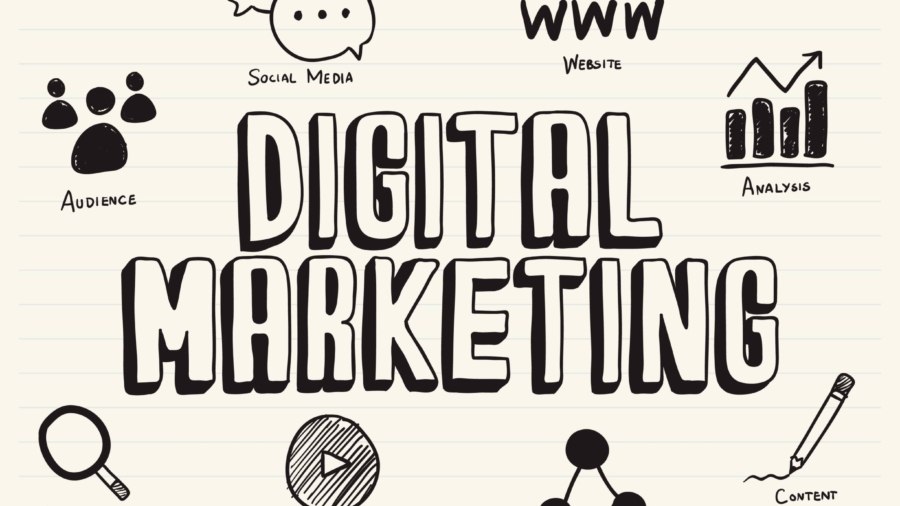
It refers to the strategies and techniques businesses use to connect with their target audience through online platforms. It includes activities such as search engine optimization (SEO), paid advertising, social media marketing, content marketing, and email campaigns that help businesses increase engagement, visibility, and revenue.
Today, digital marketing is not just about promotion. It is a dynamic field where creativity meets data. With the rise of Artificial Intelligence (AI), marketing is becoming more automated, personalized, and data-driven than ever before.
Table of Contents
How Digital Marketing Works
Digital marketing is a broad field that includes many activities ranging from website creation to email marketing. However, at its core, digital marketing focuses on connecting businesses with the right audience at the right time using online platforms.
How It creates value for business.
A successful digital marketing strategy usually follows four major stages:
Strategic Planning and Audience Definition
The first step in digital marketing is defining clear objectives such as:
- Increasing website traffic
- Generating leads
- Improving conversion rates
- Building brand awareness
After setting goals, marketers research their target audience to understand:
- Their behavior
- Their needs
- Their interests
- Their online activity
This research helps marketers create straContent Creation and Channel Activation)
In this phase, marketers create valuable content such as:
- Blog posts
- Videos
- Social media posts
- Advertisements
- Email newsletters
This content is then distributed across digital platforms like:
- Search engines
- Social media platforms
- Email lists
- Paid advertising networks
The main goal is to engage users and guide them toward taking action.
Performance Monitoring and Data Analysis
Digital marketing is highly measurable. Marketers use tools like analytics dashboards to track performance metrics such as:
- Website visitors
- Engagement rate
- Click-through rate
- Conversion performance
By analyzing these metrics, marketers understand:
- What is working well
- What needs improvement
- Where budget should be optimized
This makes digital marketing a data-driven discipline.
Iteration and Conversion Rate Optimization – CRO
Digital marketing is not a one-time activity. It requires continuous improvement.
Marketers improve campaigns by:
- Running A/B tests
- Changing ad creatives
- Improving targeting
- Optimizing landing pages
This process is called Conversion Rate Optimization (CRO), where the focus is on improving results and maximizing conversions.
Types of Digital Marketing Channels
Different digital channels serve different purposes. Understanding these channels is essential for building an effective marketing strategy.
Search Engine Marketing – SEO and SEM
Search engines help businesses reach customers actively searching for solutions.
There are two main approaches:
SEO (Search Engine Optimization)
Focuses on improving organic rankings without paying for ads.
SEM (Search Engine Marketing)
Focuses on paid ads to appear at the top of search results.
Think of it like opening a shop:
- SEO = Good location attracting natural visitors
- SEM = Paying for premium advertising space
Both strategies are important for visibility.
Social Media Marketing
Social media platforms allow brands to directly connect with their audience.
Benefits include:
- Increasing brand awareness
- Driving website traffic
- Building community trust
- Improving customer loyalty
A strong social presence also helps brands stay relevant.
Learn from industry leaders with Meta’s Coursera course. explore
Email Marketing
Email marketing remains one of the highest ROI marketing channels.
Through targeted and personalized emails, businesses can:
- Build relationships
- Promote products
- Share updates
- Increase repeat purchases
Despite being older than social media, email marketing remains extremely effective.
Affiliate and Influencer Marketing
These channels involve partnerships.
Affiliate marketing
Partners earn commission for generating sales or leads.
Influencer marketing
Influencers promote products to their audience to build trust and awareness.
Both approaches help brands expand reach through trusted voices.
Digital Marketing in the Customer Journey
Digital marketing supports every stage of the customer journey.
Let’s understand this through a simple example.
Awareness Stage
A customer searches for a product online and sees a paid advertisement due to SEM efforts.
This creates first interaction with the brand.
Consideration Stage
The customer visits the website and explores:
- Product information
- Reviews
- Blog articles
- Comparisons
Good content helps build trust.
Decision Stage
The customer may not purchase immediately.
Instead they may:
- Subscribe to email newsletters
- See retargeting ads
- Receive discount offers
This remarketing strategy helps bring users back.
Purchase Stage
After receiving a discount or reminder, the customer completes the purchase.
Positive product experience often leads to:
- Social media sharing
- Reviews
- Recommendations
Loyalty Stage
After purchase, brands maintain relationships through:
- Helpful content
- Product updates
- Exclusive offers
This improves retention and long-term loyalty.
Important Digital Marketing Metrics
Digital marketing success depends on measurable data. Some important KPIs include:
Click Through Rate – CTR
CTR measures how many people clicked compared to how many saw the content.
It shows how attractive and relevant your content is.
Website Traffic
Website traffic shows how many users visit your website.
It indicates:
- Brand visibility
- Campaign reach
- Content performance
Conversion Rate
Conversion means a user takes a desired action such as:
- Purchase
- Sign up
- Download
- Contact inquiry
Conversion rate shows marketing effectiveness.
Cost Per Acquisition – CPA
CPA shows how much it costs to acquire one customer.
This helps businesses understand marketing efficiency.
Return on Ad Spend – ROAS
ROAS measures how much revenue advertising generates compared to cost.
This helps marketers scale profitable campaigns.
Future of Digital Marketing
Digital marketing is evolving rapidly due to:
- AI tools
- Automation
- Advanced analytics
- Personalization technologies
Artificial Intelligence is transforming how campaigns are:
- Created
- Optimized
- Targeted
- Personalized
Modern marketers are now expected to understand:
- AI fundamentals
- Prompt engineering
- Marketing automation
- Data interpretation
Marketers who adapt to emerging technologies will have a strong advantage in the future.
Conclusion
Digital marketing is not just advertising. It is a continuous process of:
- Understanding audience behavior
- Creating valuable content
- Analyzing performance
- Improving strategies
Businesses that consistently optimize their digital marketing efforts can better adapt to changing trends and build stronger connections with their audience.
As technology continues to evolve, especially with AI integration, digital marketing will become even more powerful. Those who continuously learn and adapt will remain ahead in this competitive landscape.
nice post
[…] Digital marketing value refers to the long-term business growth created through online channels like search engines, social media, email, and websites. know more […]
[…] beginners think digital marketing is about selling […]