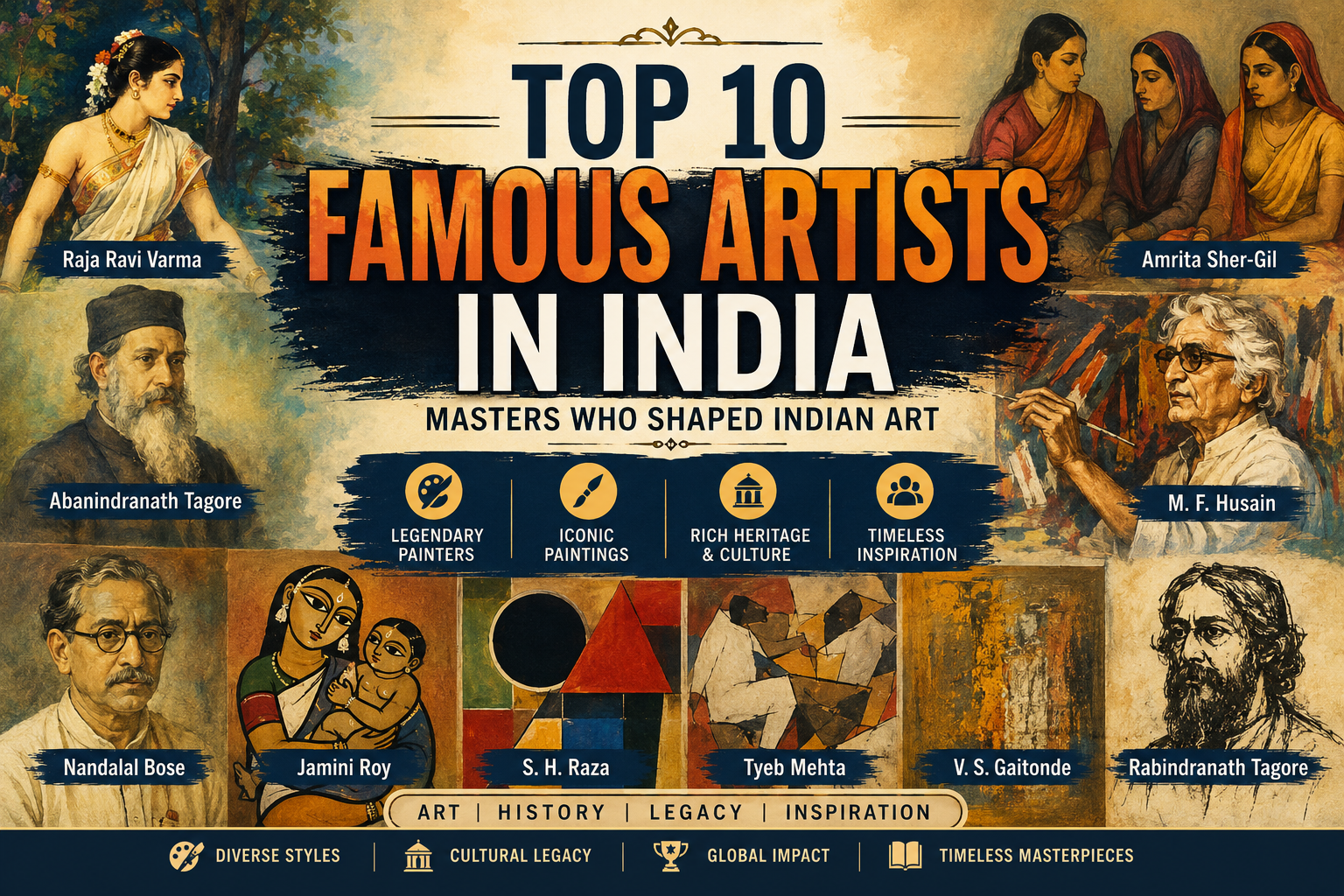

India has one of the world’s oldest and richest artistic traditions. From the magnificent murals of the Ajanta Caves to contemporary abstract masterpieces, Indian art reflects thousands of years of history, culture, religion, and creativity. Throughout history, several visionary painters have transformed the way people perceive Indian art by introducing innovative techniques while preserving the country’s cultural identity.
Whether you’re an art enthusiast, a student, a collector, or simply curious about Indian culture, learning about the most famous artists in India offers valuable insight into the evolution of Indian painting. These artists not only created timeless masterpieces but also influenced generations of painters, sculptors, designers, filmmakers, and visual storytellers.
In this comprehensive guide, you’ll discover the top 10 famous artists in India, their artistic journeys, famous paintings, unique styles, contributions to modern Indian art, and why their works continue to inspire millions around the world.
Raja Ravi Varma
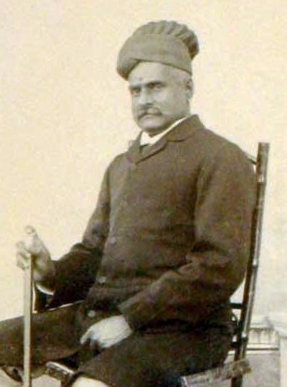
Raja Ravi Varma (1848–1906) was one of the most famous artists in India, known for blending European oil painting techniques with Indian mythology. His iconic paintings of Lakshmi, Saraswati, and Shakuntala transformed how Indians visualized gods and goddesses. Through his lithographic press, he made art affordable and accessible to millions, earning recognition as the father of modern Indian art.
| Category | Details |
| Born | 29 April 1848 |
| Birthplace | Kilimanoor, Travancore (Present-day Kerala) |
| Died | 1906 |
| Famous For | Oil paintings based on Indian mythology |
| Art Style | European Academic Realism + Indian Mythology |
| Medium | Oil on Canvas |
| Famous Paintings | Shakuntala, Lakshmi, Saraswati |
| Major Contribution | Popularized Indian mythological art and established a lithographic press |
| Legacy | Pioneer of Modern Indian Art |
Who Was Raja Ravi Varma?
Raja Ravi Varma was an Indian painter from Kilimanoor, Travancore (present-day Kerala). Born on 29 April 1848, he became one of India’s greatest painters by successfully combining European Academic Realism with stories from Indian epics and mythology.
Unlike many artists of his era, Ravi Varma believed Indian stories deserved the same artistic realism seen in European masterpieces. His paintings introduced a fresh visual language that was both culturally Indian and technically advanced.
Because of this groundbreaking approach, he is widely regarded as a pioneer of modern Indian art.
Raja Ravi Varma showed artistic talent from an early age. Growing up in the royal family of Kilimanoor Palace, he was exposed to traditional Indian art and culture.
His passion for drawing attracted the attention of the Travancore royal family, where he received encouragement and opportunities to develop his artistic skills.
During this period, he studied European painting techniques introduced by visiting artists. Instead of copying Western subjects, Ravi Varma used these techniques to portray Indian mythology, literature, and everyday life.
This decision completely changed the future of Indian artist painting.
Some of his Paintings are
The following is a list of the prominent works of Ravi Varma. On the anniversary of what would be his 150th birthday, Over 300 of his works released online.
Shakuntala
Victory of Indrajit
Yashoda and Krishna etc.
Lasting Legacy
Raja Ravi Varma passed away in 1906, but his artistic legacy continues to shape Indian visual culture.
His paintings are displayed in museums, galleries, and private collections around the world. More importantly, reproductions of his artwork continue to decorate homes, temples, educational institutions, and cultural spaces across India.
Few artists have influenced everyday visual culture as deeply as Ravi Varma. His ability to blend realism with mythology created an artistic language that remains instantly recognizable even today.
2. Abanindranath Tagore– Founder of the Bengal School of Art
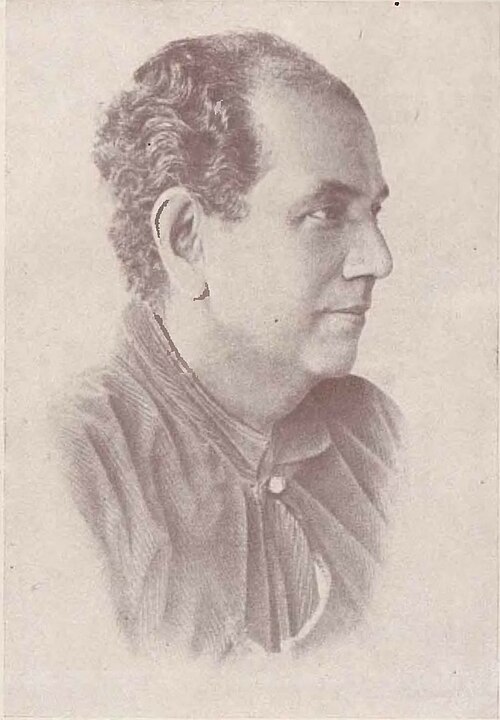
When discussing the most influential figures in Indian art history, Abanindranath Tagore holds a special place. He was not only an exceptional painter but also a visionary teacher, writer, and cultural leader who transformed modern Indian art during the British colonial period. His work inspired artists to embrace India’s own artistic heritage rather than imitate European painting styles.
Today, Abanindranath Tagore is widely recognized as the founder of the Bengal School of Art, one of the most important movements in the history of Indian painting.
Early Life
Abanindranath Tagore was born in 1871 into the famous Tagore family of Jorasanko in Kolkata (then Calcutta). Surrounded by literature, music, and art from an early age, he developed a deep appreciation for Indian culture.
Initially, he studied European painting techniques that were popular in colonial India. However, over time, he realized that India’s artistic traditions deserved equal recognition and began searching for a uniquely Indian visual identity.
How Abanindranath Tagore Became a Famous Artist
During the late nineteenth century, most Indian art schools followed European academic methods. Abanindranath believed that Indian artists should take inspiration from their own history, mythology, and traditional painting styles instead of copying Western art.
His artistic philosophy quickly gained support from students, scholars, and fellow artists. His leadership eventually gave birth to the Bengal School of Art, which became one of the first organized movements promoting Indian artistic identity.
Artistic Style
Unlike Raja Ravi Varma’s realistic oil paintings, Abanindranath preferred delicate watercolor techniques and soft washes of color.
His style combined influences from:
- Mughal miniature paintings
- Rajput paintings
- Persian art
- Japanese wash painting
- Chinese brush techniques
- Indian mythology
Instead of dramatic realism, his paintings emphasized emotion, spirituality, elegance, and atmosphere. His works often appear dreamlike, inviting viewers to reflect rather than simply observe.
Famous Paintings by Abanindranath Tagore
Bharat Mata
Painted in 1905, Bharat Mata is considered one of the most iconic paintings in Indian history.
The artwork depicts India as a calm, four-armed woman carrying a book, cloth, rice, and a rosary. Each object symbolizes knowledge, self-reliance, food, and spirituality.
Created during the Swadeshi Movement, the painting became a powerful symbol of Indian nationalism and cultural pride.
Journey’s End
This emotionally powerful painting portrays a weary camel collapsing after a long journey. Although simple in composition, it reflects themes of exhaustion, perseverance, and human struggle, demonstrating Tagore’s mastery of emotional storytelling.
Founder of the Bengal School of Art
Abanindranath Tagore’s greatest contribution was establishing the Bengal School of Art.
Working alongside educator E. B. Havell at the Government School of Art in Calcutta, he encouraged young artists to rediscover India’s traditional artistic heritage.
The movement rejected the dominance of European realism and instead celebrated:
- Indian mythology
- Ancient manuscripts
- Mughal miniatures
- Folk traditions
- Spiritual themes
- Historical subjects
The Bengal School became the foundation of modern Indian art and inspired generations of painters across the country.
Legacy
Beyond painting, Abanindranath was also an accomplished writer. His books, including Khirer Putul and Raj Kahini, remain classics in Bengali literature.
His students included some of India’s greatest artists, most notably Nandalal Bose and Jamini Roy, who carried forward his vision while developing their own unique styles.
Even today, Abanindranath Tagore is remembered as the father of the Bengal School of Art and one of the architects of modern Indian artistic identity.
3. Nandalal Bose – The Artist Who Painted India’s National Identity
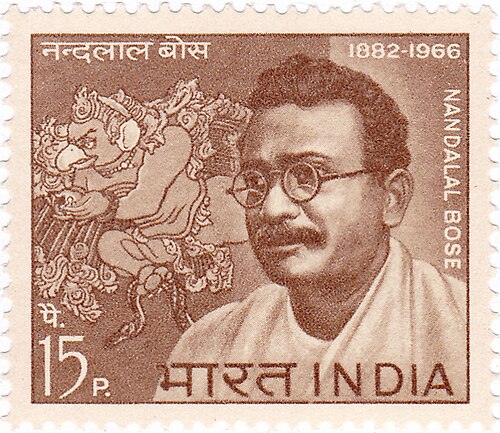
Among the greatest Indian painters of the twentieth century, Nandalal Bose stands out for combining traditional Indian aesthetics with modern artistic expression. He was not only an extraordinary painter but also an influential teacher, muralist, designer, and printmaker whose work became closely associated with India’s freedom movement and cultural revival.
His artistic vision helped shape both Indian art education and the visual identity of independent India.
Early Life
Nandalal Bose was born in 1882 in Bihar. From childhood, he enjoyed sketching scenes from daily life and traditional crafts.
Recognizing his talent, he later joined the Government School of Art in Calcutta, where he became one of the most distinguished students of Abanindranath Tagore.
Under Tagore’s guidance, Bose developed a deep appreciation for Indian artistic traditions while continuing to explore new creative approaches.
Artistic Style
Although influenced by the Bengal School, Nandalal Bose gradually developed a style that was uniquely his own.
His paintings drew inspiration from:
- Ajanta Cave murals
- Indian miniature paintings
- Folk art
- Nature
- Rural villages
- East Asian brush techniques
Rather than focusing only on mythology, Bose celebrated everyday Indian life, farmers, festivals, women, wildlife, and landscapes with remarkable simplicity and elegance.
His work feels deeply Indian while remaining timeless and universal.
Famous Works
Haripura Posters
Created for the 1938 Indian National Congress session at Haripura, these posters portrayed ordinary villagers such as potters, musicians, farmers, blacksmiths, and craftsmen.
They celebrated the dignity of labor and demonstrated that ordinary people were the true strength of India.
Bapuji
Perhaps Bose’s most recognized work, Bapuji is a simple yet powerful linocut depicting Mahatma Gandhi walking with his staff during the Dandi March.
The image has become one of the defining visual symbols of India’s independence movement.
Sati
His painting Sati reflects his mastery of emotional storytelling while drawing inspiration from Indian mythology.
Career and Influence
In 1922, Bose became Principal of Kala Bhavana at Visva-Bharati University in Santiniketan.
As a teacher, he encouraged students to observe nature and everyday life instead of merely copying older artistic styles.
His teaching philosophy influenced legendary artists such as:
- Benode Behari Mukherjee
- Ramkinkar Baij
His educational methods continue to shape Indian art institutions today.
Contribution to India
Nandalal Bose’s contributions extend well beyond painting.
Some of his most important achievements include:
- Hand-illustrating the original Constitution of India with his students.
- Designing artistic elements associated with the Bharat Ratna and Padma Awards.
- Creating iconic visual imagery for India’s freedom movement.
- Modernizing Indian art education.
His work helped define India’s cultural identity during one of the most important periods in the nation’s history.
Legacy
Nandalal Bose received the Padma Vibhushan in 1954 for his extraordinary contributions to Indian art.
Today, he remains one of the greatest educators and painters in Indian history, admired for combining artistic excellence with cultural responsibility.
4. Jamini Roy – The Master Who Brought Folk Art into Modern Painting
Jamini Roy transformed Indian modern art by proving that traditional folk painting could stand alongside the world’s greatest artistic movements.
Instead of following European realism, he embraced the artistic traditions of rural Bengal and created a style that became instantly recognizable.
Today, his paintings are celebrated for their bold simplicity, vibrant colors, and deep connection to Indian culture.
Early Life
Jamini Roy was born in 1887 in Beliatore, West Bengal.
He later studied at the Government School of Art in Calcutta, where he initially trained in European academic painting.
Although he became a successful portrait painter, Roy eventually realized that India’s artistic future lay within its own cultural traditions rather than imported European styles.
Artistic Style
Jamini Roy completely transformed his approach to painting.
His signature style features:
- Thick black outlines
- Flat colors
- Almond-shaped eyes
- Simplified forms
- Natural pigments
- Tempera painting
- Handmade surfaces
His work drew inspiration from:
- Kalighat paintings
- Bengal folk art
- Village craftsmen
- Terracotta temple sculptures
- Rural traditions
This unique visual language became one of the defining styles of modern Indian painting.
Famous Paintings
Mother and Child
One of Roy’s best-known works, this painting beautifully captures maternal affection using simplified forms and bold lines.
Three Pujarins
This artwork showcases three women engaged in devotional practices, reflecting Roy’s mastery of rhythm, balance, and spiritual elegance.
Contribution to Indian Art
Jamini Roy demonstrated that India’s folk traditions possessed immense artistic value.
His contributions include:
- Reviving Bengali folk art.
- Making Indian modern art culturally authentic.
- Promoting the use of natural colors.
- Inspiring artists to celebrate indigenous traditions.
His work helped bridge the gap between village craftsmanship and fine art.
Legacy
Jamini Roy received the Padma Bhushan for his outstanding contribution to Indian art.
Today, his paintings are displayed in major museums across India and internationally.
His artistic philosophy continues to inspire painters seeking to combine simplicity, tradition, and modern creativity.
5. Amrita Sher-Gil – The Pioneer of Modern Indian Art
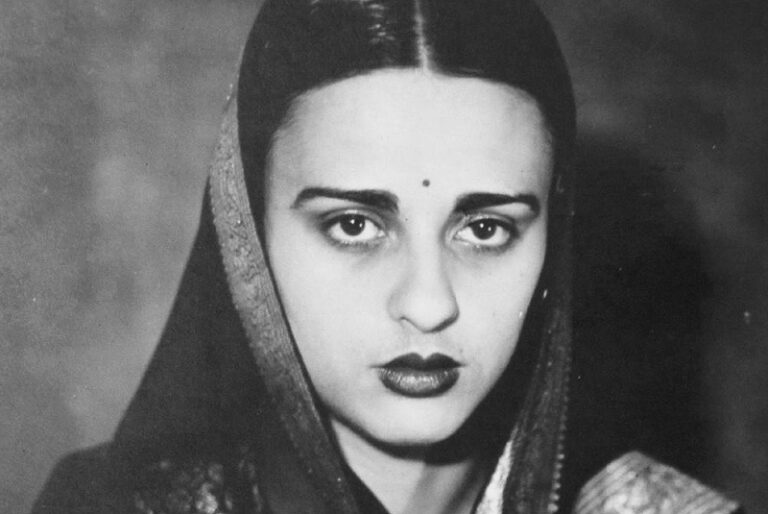
When discussing the greatest female painters in India, one name stands above all others—Amrita Sher-Gil. Often called the “Frida Kahlo of India,” she revolutionized modern Indian painting by blending European artistic techniques with Indian subjects and emotions. Although her career lasted less than a decade, her influence on Indian art remains extraordinary.
Today, Amrita Sher-Gil is regarded as one of the founders of modern Indian art and one of the most celebrated Indian artists of the twentieth century.
Early Life
Amrita Sher-Gil was born on 30 January 1913 in Budapest, Hungary, to a Sikh aristocratic father, Umrao Singh Sher-Gil Majithia, and a Hungarian mother, Marie Antoinette Gottesmann.
Growing up in a culturally diverse environment exposed her to both Eastern and Western traditions. At a young age, she demonstrated exceptional artistic talent, leading her family to send her to Paris, where she studied at the prestigious École des Beaux-Arts.
Her education introduced her to European masters such as Paul Cézanne, Paul Gauguin, and Amedeo Modigliani, whose work influenced her early paintings.
Returning to India
Although Sher-Gil achieved success in Europe, she believed that her true artistic purpose lay in India. She returned in 1934, travelling extensively across the country to understand its people, traditions, and rural life.
This journey completely transformed her artistic vision. Instead of painting European subjects, she began portraying Indian women, farmers, laborers, and village communities with remarkable dignity and emotional depth.
Artistic Style
Amrita Sher-Gil successfully merged European Post-Impressionism with traditional Indian aesthetics.
Her paintings are characterized by:
- Rich earthy colors
- Strong compositions
- Simplified forms
- Emotional expressions
- Rural subjects
- Influences from Ajanta murals
- Mughal and Pahari miniature painting
Rather than romanticizing poverty, she portrayed ordinary Indians with honesty, compassion, and quiet strength.
Famous Paintings
Three Girls
One of Sher-Gil’s most celebrated works, Three Girls portrays three young rural women sitting together in thoughtful silence.
The painting is admired for its emotional intensity and subtle portrayal of hope, uncertainty, and introspection.
Bride’s Toilet
This masterpiece captures the intimate preparations of a bride before her wedding, highlighting traditional Indian customs while revealing complex human emotions.
Contribution to Indian Art
Sher-Gil transformed Indian painting by:
- Introducing modern European techniques to Indian subjects.
- Giving rural Indians a central place in fine art.
- Creating emotionally powerful portraits of women.
- Inspiring future generations of female artists.
- Establishing a modern Indian visual language that balanced international influence with Indian identity.
Legacy
Although Amrita Sher-Gil died at the young age of 28 in 1941, her artistic legacy continues to grow.
Many of her paintings are preserved in the National Gallery of Modern Art in New Delhi and are recognized as National Art Treasures by the Government of India.
Today, she remains one of the most influential women in the history of Indian art and an enduring symbol of artistic innovation.
6. M. F. Husain – The Picasso of India
Few Indian painters have achieved the level of international fame enjoyed by Maqbool Fida Husain, popularly known as M. F. Husain. His bold brushstrokes, vibrant colors, and imaginative interpretations of Indian mythology, history, and contemporary life earned him worldwide recognition and the nickname “Picasso of India.”
For over six decades, Husain remained one of the most influential voices in modern Indian art.
Early Life
M. F. Husain was born on 17 September 1915 in Pandharpur, Maharashtra.
His family later moved to Indore, where he spent much of his childhood. Financial challenges prevented him from receiving formal artistic training during his early years.
As a young man, he moved to Bombay (now Mumbai), where he earned a living painting large cinema billboards and movie posters.
This experience greatly influenced his confident brushwork and ability to create dramatic compositions on a monumental scale.
Rise to Fame
In 1947, Husain became a founding member of the Progressive Artists’ Group, a collective that sought to redefine Indian art after independence.
The group encouraged artists to combine international modernist ideas with Indian cultural themes, giving birth to a new era of contemporary Indian painting.
Husain quickly emerged as one of its most celebrated members.
Artistic Style
His paintings are instantly recognizable because of their:
- Bold black outlines
- Vibrant color palettes
- Dynamic movement
- Cubist influences
- Simplified human figures
- Mythological storytelling
His recurring subjects included:
- Horses
- Mother Teresa
- Mahabharata
- Ramayana
- Rural India
- Historical personalities
- Indian festivals
His energetic compositions made him one of the most distinctive painters in modern Indian art.
Beyond Painting
Unlike many artists, Husain explored multiple creative fields.
His achievements include:
- Painting
- Murals
- Photography
- Printmaking
- Film direction
His experimental short film Through the Eyes of a Painter won the Golden Bear award at the Berlin International Film Festival, bringing further international recognition.
Controversies
During the 1990s, several of Husain’s paintings depicting Hindu deities became the subject of legal complaints and protests.
Although many cases were dismissed by Indian courts, the controversy led him to spend his later years outside India.
Despite these debates, his artistic achievements continue to be widely respected by museums, scholars, and collectors worldwide.
Legacy
M. F. Husain received several of India’s highest civilian honors, including:
- Padma Shri
- Padma Bhushan
- Padma Vibhushan
Today, his paintings continue to achieve record-breaking prices at international auctions, making him one of India’s most valuable and recognizable artists.
7. Syed Haider Raza – Master of the Bindu
Among the greatest abstract painters in India, Syed Haider Raza, popularly known as S. H. Raza, occupies a unique place.
His artistic journey evolved from expressive landscapes to deeply spiritual geometric compositions centered around the concept of the Bindu, a symbol representing the source of all creation in Indian philosophy.
His work transformed abstract art into a powerful expression of Indian spirituality.
Early Life
S. H. Raza was born on 22 February 1922 in Babaria, Madhya Pradesh.
From an early age, he displayed remarkable artistic talent and later studied at the prestigious Sir J. J. School of Art in Mumbai.
After India’s independence, he became one of the founding members of the Progressive Artists’ Group before moving to France to continue his artistic education.
His international experience helped him develop a distinctive artistic identity while remaining deeply connected to Indian philosophy.
Artistic Evolution
Raza’s early paintings focused primarily on landscapes.
However, during the 1970s, his work underwent a dramatic transformation.
Inspired by meditation, Indian philosophy, and ancient symbolism, he developed the Bindu series.
The Bindu represents:
- Creation
- Energy
- Consciousness
- Balance
- Infinity
This simple geometric form became the central element of many of his most celebrated paintings.
Artistic Style
Raza’s mature paintings combine:
- Bold geometric forms
- Brilliant colors
- Symbolic shapes
- Spiritual themes
- Indian philosophical concepts
- Modern abstraction
His work demonstrates how abstract painting can communicate profound emotional and spiritual experiences without depicting recognizable objects.
Famous Paintings
Saurashtra
One of Raza’s most valuable paintings, Saurashtra combines vibrant colors with geometric harmony inspired by Indian landscapes and spiritual symbolism.
Tapovan
Meaning “Forest of Meditation,” Tapovan reflects Raza’s lifelong exploration of spirituality, nature, and inner consciousness.
Recognition
Raza received numerous prestigious awards, including:
- Padma Shri
- Padma Bhushan
- Padma Vibhushan
- France’s Commandeur de la Légion d’Honneur
He also established the Raza Foundation, which continues to support young artists, musicians, writers, and cultural organizations across India.
Legacy
Today, S. H. Raza is remembered as one of India’s greatest abstract artists.
His paintings have achieved record auction prices worldwide and continue to inspire artists interested in combining modern abstraction with Indian philosophical thought.
The Bindu remains one of the most recognizable symbols in modern Indian art and stands as a lasting testament to Raza’s extraordinary artistic vision.
8. Tyeb Mehta – The Master of Emotional Expression
Tyeb Mehta is regarded as one of the most influential modern Indian painters. His emotionally charged paintings, bold use of color, and distinctive diagonal compositions made him one of the most recognizable artists in India’s post-independence art movement.
His works often explored themes of violence, conflict, suffering, and human resilience, reflecting both personal experiences and broader social realities.
Early Life
Tyeb Mehta was born in 1925 in Kapadvanj, Gujarat. He later moved to Mumbai, where he studied at the Sir J. J. School of Art.
Before becoming a full-time painter, he worked in the film industry as an editor. His artistic perspective was deeply influenced by witnessing communal violence during the Partition of India, an experience that shaped the emotional intensity of his paintings.
Artistic Style
Tyeb Mehta’s work is instantly recognizable through:
- Strong diagonal lines
- Fragmented human figures
- Bold planes of color
- Minimal compositions
- Expressionist influences
Rather than focusing on decorative beauty, his paintings communicate psychological tension and emotional depth.
Famous Paintings
Falling Figure
One of his most iconic works, Falling Figure captures the vulnerability and uncertainty of human existence. The image has become synonymous with Mehta’s exploration of fear, suffering, and transformation.
Legacy
Tyeb Mehta’s paintings regularly achieve record prices at international auctions and are displayed in major museums and private collections around the world. His work remains a cornerstone of modern Indian art and continues to inspire contemporary painters.
9. V. S. Gaitonde – India’s Greatest Abstract Painter
Vasudeo Santu Gaitonde, popularly known as V. S. Gaitonde, is widely considered one of India’s finest abstract artists. Interestingly, Gaitonde preferred to describe his work as “non-objective” rather than abstract, believing that his paintings were not representations of objects but expressions of silence, light, and inner consciousness.
Early Life
Born in 1924 in Nagpur, Gaitonde studied at the Sir J. J. School of Art in Mumbai and later became associated with the Progressive Artists’ Group.
Unlike many of his contemporaries, he preferred a quiet and deeply personal artistic journey, producing only a limited number of paintings each year.
Artistic Style
Gaitonde’s paintings are known for:
- Layered textures
- Soft luminous colors
- Minimalist compositions
- Zen philosophy
- Calligraphic influences
- Meditative atmosphere
Instead of painting recognizable subjects, he focused on creating visual experiences that encourage contemplation and introspection.
Recognition
Gaitonde received the Padma Shri and gained international recognition through exhibitions in London, New York, and later at the Solomon R. Guggenheim Museum.
His paintings are among the most expensive works ever created by an Indian artist.
Legacy
Today, Gaitonde is admired worldwide for demonstrating that simplicity can communicate profound artistic and spiritual meaning. His work continues to influence abstract painters across the globe.
10. Rabindranath Tagore – Nobel Laureate and Visionary Painter
Although Rabindranath Tagore is best known as a poet, philosopher, and Nobel Prize winner, he was also an accomplished painter who made a significant contribution to modern Indian art.
Unlike formally trained artists, Tagore began painting later in life, developing a highly original style that broke away from conventional artistic rules.
Early Life
Rabindranath Tagore was born on 7 May 1861 in Kolkata.
He became the first non-European to receive the Nobel Prize in Literature in 1913 for his poetry collection Gitanjali.
His interest in painting emerged during his later years, eventually producing more than 2,000 artworks.
Artistic Style
Tagore’s paintings feature:
- Expressionist forms
- Imaginary creatures
- Human faces
- Birds
- Landscapes
- Symbolic imagery
His spontaneous use of line and color reflected complete artistic freedom rather than academic discipline.
Contribution to Indian Art
Tagore’s influence extends beyond painting.
His achievements include:
- Founding Visva-Bharati University
- Promoting creative education
- Encouraging interdisciplinary art
- Inspiring generations of Indian artists
His educational philosophy continues to shape art education across India.
Legacy
Rabindranath Tagore demonstrated that creativity knows no boundaries. His contributions to literature, education, music, and painting make him one of India’s greatest cultural icons.
Table of the Top 10 Famous Artists in India
| Artist | Birth Year | Famous Painting | Artistic Style | Contribution |
| Raja Ravi Varma | 1848 | Shakuntala | European Realism + Indian Mythology | Pioneer of modern Indian painting |
| Abanindranath Tagore | 1871 | Bharat Mata | Bengal School | Revived Indian artistic traditions |
| Nandalal Bose | 1882 | Bapuji | Traditional Modernism | Illustrated Constitution of India |
| Jamini Roy | 1887 | Mother and Child | Folk Modernism | Popularized Bengali folk art |
| Amrita Sher-Gil | 1913 | Three Girls | Modernism | Pioneer of modern Indian painting |
| M. F. Husain | 1915 | Horses Series | Modern Expressionism | Progressive Artists’ Group |
| S. H. Raza | 1922 | Saurashtra | Geometric Abstraction | Introduced the Bindu philosophy |
| V. S. Gaitonde | 1924 | Non-objective Works | Abstract Art | India’s greatest abstract painter |
| Tyeb Mehta | 1925 | Falling Figure | Expressionism | Emotional modernism |
| Rabindranath Tagore | 1861 | Expressionist Paintings | Experimental | Art, literature, and education |
Frequently Asked Questions
Who is the most famous artist in India?
Raja Ravi Varma is widely regarded as one of the most famous artists in India because of his revolutionary paintings that combined European realism with Indian mythology.
Who is known as the father of modern Indian painting?
Raja Ravi Varma is often called the father of modern Indian painting for introducing oil painting and realistic techniques to Indian subjects.
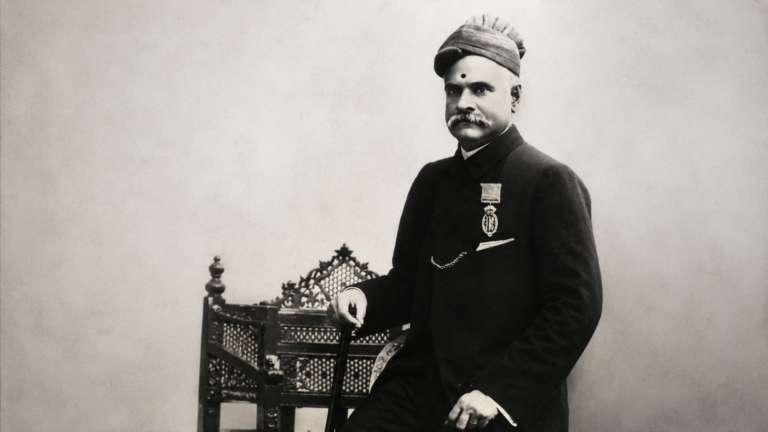
[…] Whether you are an art lover, a student, or someone interested in India’s cultural heritage, understanding Raja Ravi Varma’s life and achievements offers valuable insight into the evolution of modern Indian painting. He is one of the best among top artist of India. […]
[…] art has produced many extraordinary painters, she one of the top 10 artists of India, but few have influenced modern Indian painting as profoundly as Amrita Sher-Gil. Widely regarded […]