

Indian art has produced many extraordinary painters, she one of the top 10 artists of India, but few have influenced modern Indian painting as profoundly as Amrita Sher-Gil. Widely regarded as one of the greatest painters in Indian history, she transformed the country’s artistic landscape by blending European modernism with the realities of Indian life. Her paintings introduced a fresh visual language that celebrated ordinary people, especially women, through emotion, colour, and cultural authenticity.
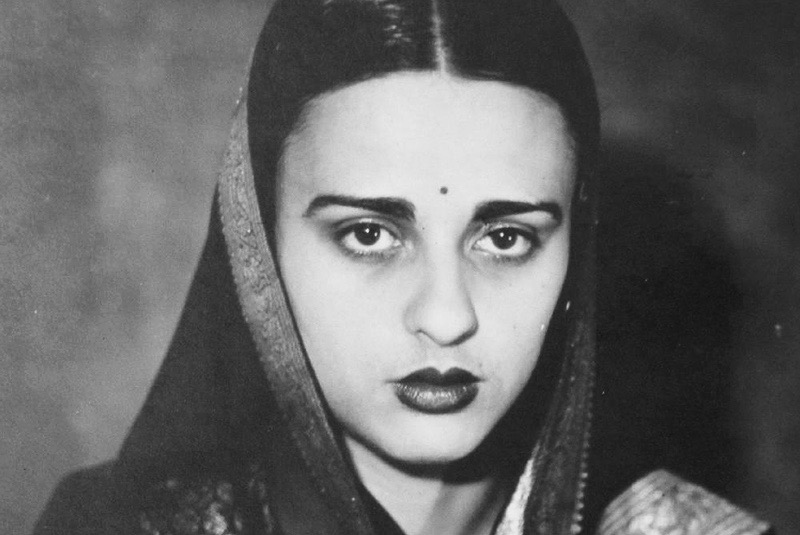
Although her artistic career lasted less than a decade, her influence continues to shape generations of artists, scholars, and art lovers. Today, Amrita Sher-Gil is recognised as one of the founders of modern Indian art, and her paintings are considered national treasures.
Her remarkable ability to combine technical brilliance with emotional storytelling makes her one of the most celebrated artists not only in India but also in the history of twentieth-century world art.
Table of Contents
Who Was Amrita Sher-Gil?
Amrita Sher-Gil (1913–1941) was a Hungarian-Indian painter widely regarded as one of the pioneers of modern Indian art. Trained in Paris, she later returned to India, where she created powerful paintings inspired by rural life, Indian women, and traditional culture. Masterpieces such as Three Girls, Bride’s Toilet, and South Indian Villagers Going to Market established her as one of India’s greatest modern artists.
Why Is Amrita Sher-Gil Famous?
Amrita Sher-Gil is famous because she introduced an entirely new direction to Indian painting during the early twentieth century.
At a time when many artists either followed European academic realism or traditional Indian miniature styles, Sher-Gil created a distinctive artistic identity by combining both worlds. She adopted the technical discipline she learned in Europe while drawing inspiration from India’s villages, traditions, and everyday life.
Her paintings are admired for their emotional depth, bold compositions, and honest portrayal of ordinary people. Rather than idealising her subjects, she painted them with dignity, realism, and empathy.
This unique approach transformed modern Indian art and inspired countless artists who followed her.
Early Life of Amrita Sher-Gil
Amrita Sher-Gil was born on 30 January 1913 in Budapest, Hungary, into a culturally rich and intellectually gifted family.
Her father, Umrao Singh Sher-Gil Majithia, was a respected Sikh scholar with a deep interest in Sanskrit and Persian literature, while her mother, Marie Antoinette Gottesmann, was a Hungarian musician and opera enthusiast.
Growing up in a multicultural household exposed Amrita to diverse artistic traditions from an early age. This combination of Indian heritage and European upbringing would later become one of the defining characteristics of her artistic identity.
When she was still a child, her family moved to Shimla, where she spent much of her early life. Even during childhood, her artistic talent was evident. She frequently sketched family members, household workers, and scenes from daily life, displaying an exceptional ability to observe people and express emotion through drawing.
Education and Artistic Training
Recognising her extraordinary talent, Amrita’s family encouraged her formal education in art.
She first received artistic instruction during her childhood before moving to Europe to continue her studies. Eventually, she enrolled at the prestigious École des Beaux-Arts in Paris, one of the world’s leading art institutions.
While studying in France, Sher-Gil trained under experienced artists and developed exceptional technical skills in:
- Oil painting
- Portraiture
- Figure drawing
- Composition
- Colour theory
- Human anatomy
Her education also introduced her to the works of influential European masters, including Paul Cézanne, Paul Gauguin, and Amedeo Modigliani. Their use of colour, structure, and expressive forms significantly influenced her early paintings.
Despite achieving success in Europe, Sher-Gil increasingly felt that her true artistic voice could only emerge through the subjects and experiences of India.
Early Career in Europe
Before becoming famous in India, Amrita Sher-Gil established herself in the Paris art scene.
Her early paintings reflected the influence of European Post-Impressionism. These works included portraits, self-portraits, nude studies, still-life compositions, and paintings of friends and fellow students.
Her breakthrough came in 1932 with the painting Young Girls.
The artwork received widespread appreciation and earned her election as an Associate of the prestigious Grand Salon in Paris, making her one of the youngest artists—and the first Asian woman—to receive this honour.
This achievement confirmed her extraordinary artistic ability at an early age and established her reputation within European art circles.
Returning to India: A Turning Point
Although Paris offered artistic recognition, Sher-Gil believed that her creative destiny lay elsewhere.
In 1934, she returned to India with a desire to reconnect with her cultural roots and discover an authentic artistic identity.
She travelled extensively across the country, visiting regions rich in history, architecture, and artistic traditions. During these journeys, she studied:
- Ajanta cave murals
- Mughal miniature paintings
- Pahari painting traditions
- Rural communities
- Village life
- Traditional Indian customs
These experiences transformed her vision as an artist.
Instead of painting fashionable European subjects, she turned her attention to farmers, village women, labourers, and everyday Indian life.
This marked the beginning of her mature artistic period and the phase for which she is most celebrated today.
Amrita Sher-Gil’s Artistic Style
Amrita Sher-Gil developed a style unlike any other Indian artist of her generation.
Her paintings successfully merged the technical sophistication of European modernism with the emotional depth of Indian life.
Some defining characteristics of her work include:
Rich Earthy Colours
Rather than using highly decorative palettes, Sher-Gil preferred warm reds, deep browns, muted greens, and natural ochres that reflected the landscapes and people of India.
Emotional Storytelling
Her paintings often communicate powerful emotions without dramatic gestures. Silence, introspection, hope, loneliness, and resilience are expressed through subtle body language and facial expressions.
Celebration of Ordinary People
Instead of focusing on royalty or mythology, Sher-Gil painted ordinary villagers, women, children, and workers with dignity and compassion.
Simplified Forms
Her compositions are carefully balanced, using simplified shapes that direct attention toward the emotional experience rather than unnecessary details.
Fusion of East and West
Perhaps her greatest achievement was combining European artistic training with Indian cultural themes, creating a style that felt both modern and deeply rooted in Indian tradition.
Why Amrita Sher-Gil Changed Indian Art Forever
Before Amrita Sher-Gil, many artists either followed European academic realism or traditional revivalist styles.
Sher-Gil introduced a completely new perspective.
She demonstrated that Indian subjects could be portrayed through modern artistic techniques without losing their cultural authenticity.
Her work encouraged artists to move beyond imitation and create original expressions inspired by Indian society.
More importantly, she gave visibility to rural women and ordinary people, placing them at the centre of fine art with dignity and humanity.
Her influence helped shape the direction of modern Indian painting and continues to inspire artists around the world.
Amrita Sher-Gil’s Most Famous Paintings and Their Meaning
Amrita Sher-Gil believed that art should reflect real life rather than idealized beauty. Unlike many artists of her time, she chose to paint ordinary people—their emotions, struggles, traditions, and quiet dignity. Her paintings are admired not only for their technical brilliance but also for the empathy they convey.
Although she created many remarkable works during her short career, several paintings stand out as defining milestones in the history of modern Indian art.
1. Young Girls (1932)
Young Girls is one of Amrita Sher-Gil’s earliest masterpieces and the painting that first brought her international recognition.
Created while she was studying in Paris, the artwork portrays two young women seated together in quiet contemplation. One appears confident and outward-looking, while the other seems thoughtful and reserved. Rather than focusing on dramatic action, Sher-Gil explores subtle emotions through posture, expression, and colour.
The painting reflects the influence of European Post-Impressionism while revealing her exceptional ability to portray psychological depth.
Its success earned Sher-Gil election as an Associate of the Grand Salon in Paris, making her one of the youngest artists and the first Asian woman to receive this distinction.
2. Three Girls (1935)
Among all the paintings created by Amrita Sher-Gil, Three Girls is perhaps the most celebrated.
The painting depicts three rural Indian women sitting together in silence. There is no dramatic narrative, yet the work conveys a profound sense of introspection, uncertainty, and emotional resilience.
Instead of portraying women as decorative figures, Sher-Gil presents them as individuals with complex inner lives. Their expressions, body language, and muted colour palette communicate themes of hope, responsibility, and quiet strength.
Today, Three Girls is widely regarded as one of the defining masterpieces of modern Indian painting and remains one of the highlights of the National Gallery of Modern Art’s permanent collection.
3. Bride’s Toilet (1937)
Painted after Sher-Gil returned to India, Bride’s Toilet forms part of her celebrated South Indian trilogy.
The artwork captures intimate moments before a wedding, portraying women preparing a bride for one of the most important occasions of her life.
Rather than presenting luxury or celebration, Sher-Gil focuses on human relationships and emotion. The painting emphasizes simplicity, tradition, and the quiet anticipation surrounding marriage.
Its earthy colours, carefully balanced composition, and graceful figures demonstrate the maturity of Sher-Gil’s artistic vision.
4. South Indian Villagers Going to Market (1937)
This masterpiece reflects Sher-Gil’s fascination with everyday rural life.
The painting portrays villagers walking together toward a local market, emphasizing community, movement, and shared experience.
Rather than romanticizing village life, Sher-Gil represents ordinary people with honesty and dignity. The elongated figures, harmonious composition, and restrained colour palette create a timeless image of rural India.
The painting is considered one of the finest examples of her mature Indian style.
5. Brahmacharis (1937)
Another important work from her South Indian period, Brahmacharis depicts young students engaged in religious education.
Sher-Gil portrays the children with remarkable sensitivity, avoiding idealization while highlighting innocence, discipline, and spirituality.
The composition reflects her growing interest in India’s cultural traditions and everyday social life.
6. Village Scene (1938)
In Village Scene, Sher-Gil shifted her attention to the rhythms of rural existence.
The painting portrays villagers engaged in ordinary daily activities, celebrating simplicity rather than grandeur.
Its balanced composition and warm earthy tones reveal the influence of Indian miniature painting while maintaining the expressive qualities she developed during her European training.
The Evolution of Amrita Sher-Gil’s Art
Amrita Sher-Gil’s artistic journey can be divided into two distinct phases.
The European Phase
During her years in Paris, her paintings reflected European artistic traditions.
Common subjects included:
- Self-portraits
- Portraits of friends
- Nude studies
- Still-life compositions
- Interior scenes
Her work displayed influences from Post-Impressionism while demonstrating exceptional technical precision.
The Indian Phase
After returning to India in 1934, her artistic direction changed dramatically.
Instead of fashionable European subjects, she painted:
- Rural women
- Farmers
- Village communities
- Traditional ceremonies
- Indian landscapes
- Everyday domestic life
This transformation gave her work a unique identity that distinguished her from both European modernists and traditional Indian painters.
Sher-Gil herself believed that India had become the true source of her artistic inspiration.
Amrita Sher-Gil’s Contribution to Modern Indian Art
Amrita Sher-Gil’s contribution extends far beyond her individual paintings.
She fundamentally changed the direction of Indian art in several important ways.
Bridging East and West
Sher-Gil successfully combined European artistic techniques with Indian cultural themes.
Rather than imitating Western art, she adapted its methods to express Indian experiences.
Giving Visibility to Ordinary Indians
Unlike many earlier painters who focused on mythology or royalty, Sher-Gil painted villagers, women, labourers, and children.
She demonstrated that everyday life possessed artistic beauty worthy of serious attention.
Transforming the Representation of Women
Women occupy a central place in Sher-Gil’s work.
Rather than depicting them as passive or decorative figures, she portrayed them as thoughtful, resilient, and emotionally complex individuals.
This approach was remarkably progressive for its time and continues to inspire artists today.
Inspiring Future Generations
Sher-Gil’s work influenced many of India’s leading modern artists.
Her willingness to develop an independent artistic voice encouraged future painters to explore personal identity, cultural heritage, and social realities through art.
Why Amrita Sher-Gil Is Called a Pioneer of Modern Indian Art
Amrita Sher-Gil is often described as a pioneer because she helped redefine what modern Indian painting could become.
She demonstrated that:
- Modern art could remain deeply Indian.
- Rural life deserved artistic recognition.
- Women could become central figures in fine art.
- Emotional truth was more important than decorative beauty.
- Cultural identity and artistic innovation could coexist.
These ideas transformed Indian painting during the twentieth century and continue to influence artists around the world.
Where Can You See Amrita Sher-Gil’s Paintings in India?
If you want to experience the brilliance of Amrita Sher-Gil’s paintings in person, the National Gallery of Modern Art (NGMA) in New Delhi is the most important destination.
The NGMA houses the largest permanent collection of Sher-Gil’s works, preserving many of her finest paintings for future generations. Art historians consider it the best place to understand the evolution of her artistic journey—from her early European-influenced works to the deeply Indian masterpieces that defined her legacy.
Some of the most celebrated paintings displayed in the collection include:
- Young Girls
- Three Girls
- South Indian Villagers Going to Market
- Hungarian Gypsy Girl
The National Gallery of Modern Art holds 95 of Amrita Sher-Gil’s 172 documented paintings, making it the world’s most significant public collection of her work.
Beyond the NGMA, selected paintings are occasionally displayed in museums, cultural institutions, and special exhibitions across India. These exhibitions provide visitors with opportunities to explore different phases of Sher-Gil’s artistic development.
For those who cannot visit New Delhi, the National Gallery of Modern Art also provides digital resources, exhibition catalogues, and information about its collection, making her work accessible to students, researchers, and art enthusiasts worldwide.
Awards, Recognition, and Legacy
Although Amrita Sher-Gil passed away at the young age of 28, her contribution to Indian art remains extraordinary.
Today, she is widely recognised as one of the founders of modern Indian art. Her paintings are regarded as national treasures, and many of them are protected as significant works of India’s cultural heritage.
Her achievements extend far beyond her lifetime. Universities, museums, historians, and artists continue to study her paintings because they represent a remarkable fusion of European artistic training and Indian cultural identity.
Sher-Gil’s work has also gained international recognition through exhibitions, academic research, and major art publications, reinforcing her reputation as one of the most influential painters of the twentieth century.
Why Amrita Sher-Gil Still Matters Today
More than eighty years after her death, Amrita Sher-Gil continues to inspire artists across the world.
Her paintings remain relevant because they explore universal themes such as:
- Identity
- Womanhood
- Loneliness
- Family
- Rural life
- Tradition
- Human dignity
- Cultural belonging
These themes continue to resonate with modern audiences, making her work timeless rather than historical.
Contemporary painters, photographers, illustrators, designers, and filmmakers frequently draw inspiration from her compositions, colour palettes, and ability to communicate emotion with simplicity.
Timeline of Amrita Sher-Gil’s Life
| Year | Milestone |
|---|---|
| 1913 | Born in Budapest, Hungary. |
| 1921 | Moved with her family to India and spent much of her childhood in Shimla. |
| 1929 | Began advanced art studies in Paris. |
| 1932 | Completed Young Girls and gained recognition at the Grand Salon in Paris. |
| 1934 | Returned permanently to India to explore Indian artistic traditions. |
| 1935–1938 | Created masterpieces including Three Girls, Bride’s Toilet, Brahmacharis, and South Indian Villagers Going to Market. |
| 1941 | Passed away in Lahore at the age of 28, leaving behind an extraordinary artistic legacy. |
Lesser-Known Facts About Amrita Sher-Gil
1. She Was a Child Prodigy
Sher-Gil showed exceptional artistic talent from an early age and began painting long before receiving formal training.
2. She Combined Two Artistic Worlds
Her unique style successfully blended European modernism with Indian traditions, creating a visual language unlike that of any other Indian artist.
3. She Changed How Women Were Portrayed
Instead of presenting women as decorative figures, Sher-Gil painted them with emotional depth, dignity, and individuality.
4. Her Career Lasted Less Than Ten Years
Despite her brief artistic career, she produced some of the most influential paintings in Indian history.
5. Her Paintings Continue to Break Records
Original works by Amrita Sher-Gil are among the most valuable paintings in India and are highly sought after by museums and collectors.
Frequently Asked Questions
Who was Amrita Sher-Gil?
Amrita Sher-Gil was a Hungarian-Indian painter who is widely regarded as one of the pioneers of modern Indian art. She combined European artistic techniques with Indian subjects to create a distinctive and influential style.
Why is Amrita Sher-Gil famous?
She is famous for transforming modern Indian painting through emotionally powerful works that portrayed rural life, Indian women, and everyday experiences with honesty and artistic excellence.
What is Amrita Sher-Gil’s most famous painting?
Some of her best-known paintings include Three Girls, Young Girls, Bride’s Toilet, South Indian Villagers Going to Market, and Brahmacharis.
Why is Amrita Sher-Gil called a pioneer of modern Indian art?
She demonstrated that modern artistic techniques could be used to express Indian culture, rural life, and social realities while creating an original artistic identity.
Where can I see Amrita Sher-Gil’s paintings in India?
The best place to view her paintings is the National Gallery of Modern Art (NGMA) in New Delhi, which houses the largest permanent collection of her works, including Three Girls, Young Girls, and South Indian Villagers Going to Market.

[…] discussing the greatest female painters in India, one name stands above all others—Amrita Sher-Gil. Often called the “Frida Kahlo of India,” she revolutionized modern Indian painting by […]