
Most beginners think digital marketing is about selling products.
But experienced marketers know the truth.
Great marketing is not about selling. It is about solving customer problems.
Before someone buys from you, they go through a process. They discover your brand, compare options, read reviews, ask questions, and only then make a decision.
This process is called the customer journey.
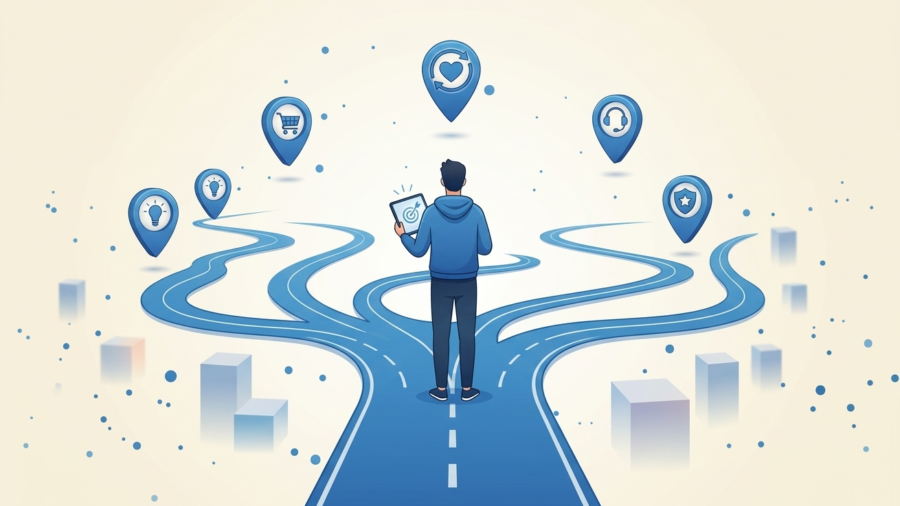
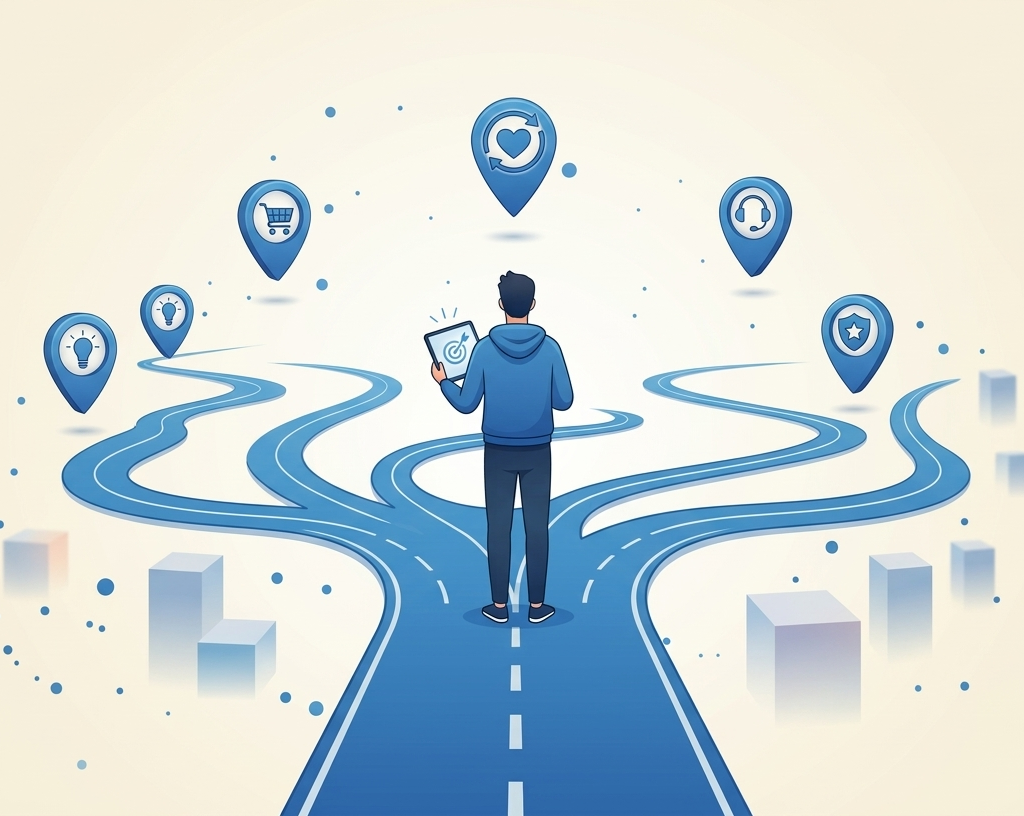
And when marketers visualize this process, it becomes a customer journey and journey map strategy.
In this guide, you will learn:
- What customer journey means
- What a journey map is
- Why beginners must understand it
- How it improves marketing results
- Real examples you can relate to
If you are a beginner digital marketer, this concept can completely change how you think about marketing.
Table of Contents
What is a Customer Journey?
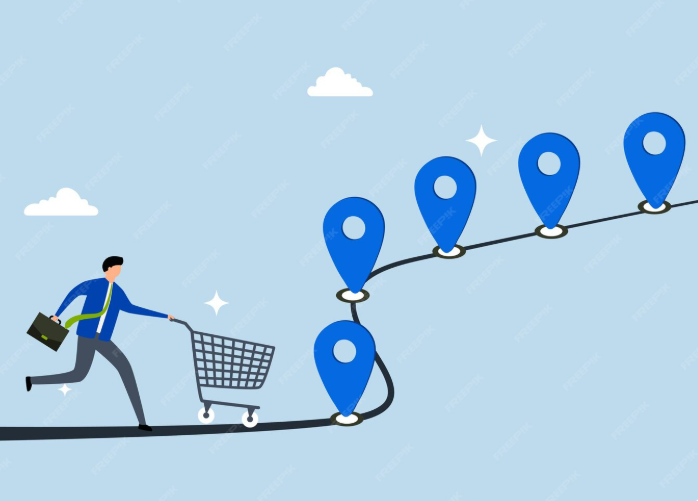
A customer journey is the complete path a customer takes from discovering a product to becoming a loyal customer.
It usually includes:
- Discovery
- Research
- Comparison
- Decision
- Purchase
- Experience
- Recommendation
For example:
Think about the last time you recommended an app, tool, or service.
Ask yourself:
- How did you discover it?
- What made you trust it?
- Why did you choose it?
- What made you recommend it?
That entire experience is your customer journey.
Why Customer Journey Matters in Digital Marketing
Many businesses ask:
“How do we sell more?”
But smart marketers ask:
“How do we help customers solve their problems?”
This is the difference between average marketing and great marketing.
Effective digital marketing starts with understanding:
- Customer needs
- Customer behavior
- Customer problems
- Customer motivations
These problems are called pain points.
What are Customer Pain Points?
Customer pain points are the problems customers want to solve.
Examples include:
- Slow website
- Confusing pricing
- Lack of information
- Poor support
- Complicated signup process
Businesses that focus on solving pain points build trust faster.
And trust leads to conversions.
Real Life Example of a Customer Journey
Let’s understand customer journey and journey map with a simple example.
Imagine you need a weather app because your current one is inaccurate.
Stage 1 – Awareness
You search: “Best weather apps”
You see:
- Blog articles
- Ads
- Recommendations
One app looks familiar because:
- A friend mentioned it
- You saw an ad earlier
This is the awareness stage.
Stage 2 – Consideration
Now you compare options by:
- Reading reviews
- Checking features
- Comparing ratings
Two apps look good.
You choose one because:
- Familiar brand
- Good reviews
- Free trial
This is the consideration stage.
Stage 3 – Decision
You download the app.
But it has a problem.
Instead of uninstalling, you:
- Contact support
- Use live chat
- Check reviews again
Support fixes the issue quickly.
Now your trust increases.
Stage 4 – Purchase
After using the free trial, you get an email reminder.
Since the app solved your problem, you buy the subscription.
Now you are a paying customer.
Stage 5 – Loyalty
You are happy with the product.
So you:
- Continue using it
- Recommend it
- Leave reviews
Now you are a loyal customer.
This is a complete customer journey example.
What are Customer Touchpoints?
Every interaction with a brand is called a touchpoint.
Examples of touchpoints:
- Google search result
- Advertisement
- Website visit
- Reviews
- Customer support
- Free trial
- Email reminder
Each touchpoint can:
- Improve trust
- Damage trust
- Influence decisions
One bad experience can end the journey.
This is why businesses optimize every interaction.
What is a Customer Journey Map?
A customer journey map is a visual representation of the customer journey.
It shows:
- Where customers discover you
- How they interact
- What problems they face
- What influences their decisions
In simple words:
Customer journey = customer experience path
Journey map = visual diagram of that path
Businesses often create multiple journey maps for different customer types.
Because:
Different customers behave differently.
Benefits of Customer Journey Mapping
Understanding customer journey and journey map helps marketers:
Improve customer experience
You understand what customers expect.
Increase conversions
Better experience leads to better decisions.
Identify problems
You can find where customers drop off.
Improve marketing targeting
You know which channels matter most.
Build loyalty
Good experiences create repeat customers.
How Beginners Can Use Journey Maps
If you are a beginner digital marketer, start simple.
You can create a basic journey map using:
Step 1 – Identify customer stages:
- Awareness
- Research
- Purchase
- Retention
Step 2 – List touchpoints:
- Website
- Ads
- Social media
Step 3 – Identify problems:
Where do customers struggle?
Step 4 – Improve experience:
Add:
- Better content
- Faster support
- Clear information
Even a simple journey map can improve marketing results.
Conclusion
Digital marketing is not just about traffic or ads.
It is about understanding people.
When marketers understand the customer journey, they stop guessing and start improving experiences.
A well-planned customer journey and journey map helps businesses:
- Improve customer satisfaction
- Increase conversions
- Build long term loyalty
If you are starting in digital marketing, mastering this concept will give you a strong strategic advantage.
Because the best marketers don’t just sell.
They guide customers.
FAQs
What is a customer journey in digital marketing?
A customer journey is the complete experience a customer has with a brand from discovery to purchase and loyalty.
What is a customer journey map?
A customer journey map is a visual representation of how customers interact with a business across different stages.
What are customer touchpoints?
Touchpoints are interactions between a customer and a brand such as ads, websites, emails, and support.
How do beginners create a journey map?
Beginners can start by identifying stages, listing touchpoints, finding pain points, and improving weak areas.